
Best Treatment for Acne Scars in Bangalore : Laser, Microneedling or Chemical Peels?
Dealing with persistent pitted scars and uneven skin texture after acne has healed can feel endlessly frustrating, especially when expensive over the counter creams and serums fail to deliver results. If you are researching solutions, finding the best treatment for acne scars in Bangalore requires looking beyond generic online advice and understanding how specific procedures match your unique skin morphology. Whether you live in Basaveshwar Nagar or nearby neighborhoods across Bangalore, this comprehensive guide will walk you through everything you need to know about laser resurfacing, microneedling, and chemical peels, along with cost factors, recovery times, and how to choose the right clinic. Table of Contents One-Minute Summary What Are the Different Types of Acne Scars? Which Is Better for Acne Scars: Laser, Microneedling or Chemical Peels? How Does Laser Treatment Help Acne Scars? Is Microneedling Effective for Deep Acne Scars? Can Chemical Peels Improve Acne Scars and Pimple Marks? How Much Does Acne Scar Treatment Cost in Bangalore? How Many Sessions Are Needed for Acne Scar Treatment? How Can You Choose the Right Acne Scar Clinic in Bangalore? Frequently Asked Questions About Acne Scar Treatment Conclusion & Next Steps One-Minute Summary No Single Universal Solution: There is no single “best” treatment; success depends heavily on whether you have rolling, boxcar, or ice-pick scars. Core Options Compared: Laser resurfacing targets deep textural issues, microneedling stimulates collagen remodeling for atrophic scars, and chemical peels primarily address superficial pigmentation and minor texture concerns. Customization Is Key: Most patients benefit from a personalized consultation to determine session counts, realistic recovery timelines, and custom treatment combinations. Local Care: Qualified medical practitioners at specialized clinics like The Body Shape in Basaveshwar Nagar, Bangalore, offer tailored assessments to guide your skin restoration journey safely. Ready to transform your skin? Call The Body Shape today to schedule your consultation and find out which treatment options suit your unique skin type! What Are the Different Types of Acne Scars? Before choosing a procedure, it is crucial to understand that acne scars are not all alike. Dermatologists generally classify them into depressed (atrophic) scars and raised (hypertrophic or keloid) scars. Recognizing your specific scar pattern helps clarify why the best treatment for acne scars in Bangalore varies from person to person. How can you recognise rolling, boxcar, and ice-pick scars? Rolling Scars: These feature wide, shallow depressions with sloping edges, giving the skin a wave-like or uneven texture. They occur when fibrous bands of tissue pull the epidermis down against the normal skin layer. Boxcar Scars: These are broad depressions with sharply defined, steep vertical edges. They resemble miniature chickenpox scars and can be shallow or deep depending on the extent of collagen loss. Ice-Pick Scars: These are narrow, deep, and sharply V-shaped pits that plunge far into the skin’s dermal layer. They are often the most challenging to treat with surface treatments alone. Post-Accidental Marks vs. Structural Scars: Flat brown, purple, or red marks left behind after a breakout are actually post-inflammatory hyperpigmentation or erythema, not true structural scars. While they fade with time or gentle topicals, true pitted scars require professional remodeling. Which Is Better for Acne Scars: Laser, Microneedling or Chemical Peels? When comparing popular skin rejuvenation procedures, patients often wonder which technique reigns supreme. The reality is that laser resurfacing, microneedling, and chemical peels serve distinct physiological purposes. Identifying the best treatment for acne scars in Bangalore means matching your scar depth and skin tolerance to the right modality. Treatment Main Consideration Important Limitation Laser Resurfacing Selected textural scars and deep collagen stimulation Downtime and pigmentary risks vary by laser type and skin tone Microneedling Stimulating natural collagen remodelling for atrophic scars Multiple sessions are typically needed for visible smoothing Chemical Peels Superficial scars, uneven tone, and post-acne pigmentation Not a universal solution for deep pitted or tethered scars Deep or tethered scars frequently require advanced combination approaches, such as subcision paired with fractional lasers or radiofrequency microneedling, to break up scar tissue effectively. How Does Laser Treatment Help Acne Scars? Laser resurfacing remains a cornerstone of advanced dermatology. By utilizing concentrated beams of light, fractional lasers create microscopic zones of controlled thermal injury in the skin, prompting the body to shed damaged outer layers and aggressively synthesize fresh collagen. Understanding the Laser Process and Recovery Fractional Technology: Fractional lasers treat only a fraction of the skin surface at a time, leaving surrounding tissue intact to accelerate healing and minimize downtime. What to Expect During Recovery: Mild redness, swelling, and temporary skin flaking are common for a few days post-procedure, depending on laser intensity. Pigmentary Caution: Practitioners must carefully evaluate darker skin tones to mitigate post-inflammatory hyperpigmentation risks. Realistic Goals: While lasers dramatically smooth overall skin contour, they improve rather than magically erase stubborn scars. Incorporating laser therapy into your search for the best treatment for acne scars in Bangalore ensures you leverage cutting-edge dermatological technology. Is Microneedling Effective for Deep Acne Scars? Microneedling often referred to as collagen induction therapy uses fine needles to puncture the skin uniformly, triggering natural healing responses and new collagen production. Standard Microneedling vs. Radiofrequency Microneedling (MNRF) Standard Microneedling: Relies on mechanical punctures to stimulate surface remodeling, making it ideal for mild to moderate atrophic scars. Radiofrequency Microneedling (MNRF): Combines traditional needling with radiofrequency energy delivered directly into the deeper dermal layers. This heats tissue to contract collagen fibers and stimulate robust structural healing. Limitations for Deep Pits: While highly effective for rolling and mild boxcar scars, deeply tethered ice-pick scars may require targeted focal treatments like chemical reconstruction of skin scars (CROSS) alongside standard microneedling protocols. Personalized Planning: Pinpointing whether microneedling fits into your personal roadmap for the best treatment for acne scars in Bangalore depends entirely on an in-person clinical evaluation of your skin’s thickness and elasticity. Can Chemical Peels Improve Acne Scars and Pimple Marks? Chemical peels involve applying a professionally formulated acid solution (such as glycolic, salicylic, or TCA) to exfoliate the upper layers of damaged skin safely. The Role of Peels in Scar
Types of Acne Scars and Their Treatments : A Complete Guide
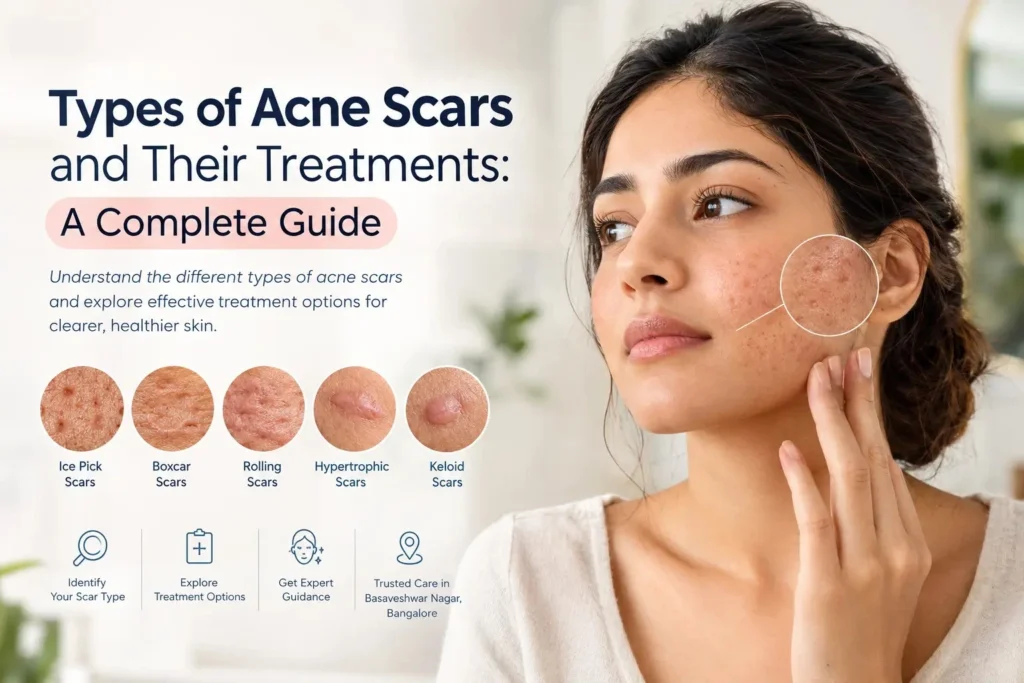
Acne breakouts can vanish, but the structural marks and textural changes left behind often remain long after active pimples heal. If you are looking into types of acne scars, understanding your specific scar pattern is the first step toward effective restoration. Because skin tone, collagen response, and scar depth vary significantly, effective types of acne scars and treatment plans require individual clinical evaluation. At The Body Shape in Basaveshwar Nagar, Bangalore, we guide clients through non-surgical, clinical aesthetic solutions tailored to their unique skin profiles. This comprehensive guide covers different types of acne scars and their treatments, helping you navigate everything from identification to clinical options, costs, and pre-procedure considerations. Need Personalised Guidance? Call The Body Shape: +91 91644 56216 Table of Contents How Can You Identify Different Types of Acne Scars? What Is the Best Treatment for Different Types of Acne Scars? How Can You Treat Deep Acne Scars on Your Cheeks If Skincare Products Have Not Worked? How Much Does Acne-Scar Treatment Cost in Bangalore, and How Many Sessions Are Needed? Where Can You Enquire About Acne-Scar Treatment in Basaveshwar Nagar, Bangalore? What Should You Know Before Choosing an Acne-Scar Treatment? Frequently Asked Questions Conclusion & Next Steps What are the main types of acne scars and their treatments? Acne scars are primarily classified as atrophic (depressed) including ice pick, boxcar, and rolling scars, or hypertrophic (raised). Flat red or brown marks are post-inflammatory marks rather than true structural scars. Because no single therapy works for all scar depths, effective treatment depends on an individual clinical skin assessment. Depressed scars often respond to microneedling, subcision, or peels, whereas raised scars require targeted flattening therapies. How Can You Identify Different Types of Acne Scars? Before exploring procedural options, it is essential to learn how to identify different types of acne scars. Scars form when severe inflammation disrupts healthy collagen production in the dermis. When skin tissue is lost, depressed (atrophic) scars develop; when excess collagen accumulates, raised scars form. What Do Ice Pick, Boxcar, and Rolling Scars Look Like? Ice Pick Scars: Visual Pattern: Narrow, steep, and deep pits that extend into the mid-to-deep dermis. They look as though the skin was pierced by a small sharp instrument. Common Location: Frequently seen on cheeks and areas with thinner dermal tissue. Boxcar Scars: Visual Pattern: Round, oval, or rectangular depressions featuring sharply defined vertical edges. Common Location: Frequently found on the lower cheeks and jawline where skin tissue is thicker. Rolling Scars: Visual Pattern: Broad, shallow depressions with sloping edges that create a wave-like or uneven texture across the face. Underlying Cause: Fibrous bands anchor the skin tissue to deeper structures, pulling the epidermis downward. What Are Hypertrophic Scars and Keloids? Unlike atrophic scars, hypertrophic scars and keloids present as raised, thickened tissue due to overproduction of collagen during inflammatory healing: Hypertrophic Scars: Firm, raised bumps that stay within the boundary of the original acne lesion. Keloids: Larger, raised scars that extend beyond the border of the original pimple, sometimes causing itching or discomfort. Are Flat Dark Spots After Acne Actually Scars? Many people confuse flat dark or pink spots with true types of acne scars. These flat marks are known as: Post-Inflammatory Hyperpigmentation (PIH): Flat brown or dark spots caused by melanin accumulation after inflammation. Post-Inflammatory Erythema (PIE): Flat red or purplish marks caused by damaged or dilated capillary blood vessels near the surface. Neither PIH nor PIE involves structural collagen loss, meaning they fade more readily with surface treatments compared to true structural depressions. What Is the Best Treatment for Different Types of Acne Scars? There is no single best treatment for acne scars that works universally. Because most individuals experience a combination of scar shapes, effective clinical plans usually involve targeted, combined approaches. Which Treatments May Help Ice Pick Acne Scars? Deep, narrow ice pick depressions rarely respond well to surface exfoliation alone. Clinical approaches include: TCA CROSS (Chemical Reconstruction of Skin Scars): Application of high-concentration Trichloroacetic Acid directly inside the pit to stimulate localized collagen synthesis. Punch Techniques: Minor procedural methods designed to elevate or remove isolated deep pits. What Treatments May Improve Boxcar and Rolling Scars? Because rolling scars are tethered underneath and boxcar scars have defined edges, procedures focus on releasing fibrous bands and encouraging uniform tissue remodeling: Subcision for Acne Scars: A specialized technique where a small needle releases fibrous tissue tethering the skin, allowing the surface to rise. Energy-Based & Resurfacing Options: Techniques designed to smooth rigid boxcar borders and improve overall skin contour. Can Microneedling and Chemical Peels Improve Acne Scars? Microneedling for Acne Scars: Creates controlled micro-injuries in the skin, triggering continuous collagen and elastin production to soften rolling or shallow boxcar depressions. Chemical Peel for Acne Scars: Exfoliates outer surface layers to soften rough skin texture and accelerate skin cell renewal for surface irregularities. How Are Raised Acne Scars Treated? Hypertrophic and keloid scars require treatments designed to break down excess collagen build-up: Corticosteroid Injections: Help flatten raised tissue and reduce localized discomfort. Silicone Gels & Targeted Therapies: Support tissue softening and prevent further scar enlargement. Scar Treatment Comparison Matrix Scar Type Primary Features Possible Clinical Options Downtime Expectation Ice Pick Narrow, deep, steep pits TCA CROSS, Punch techniques 3–7 days mild scabbing Boxcar Defined, vertical edges Resurfacing, Chemical peels 2–5 days superficial redness Rolling Wide, wave-like texture Subcision, Microneedling (MNRF) 2–4 days mild swelling/bruising Raised / Keloid Lumpy, elevated tissue Intralesional injections, silicone Minimal to none PIH / PIE Flat, colored marks Superficial Peels, targeted brighteners Minimal How Can You Treat Deep Acne Scars on Your Cheeks If Skincare Products Have Not Worked? A common source of frustration for many individuals is using expensive serums, spot creams, and home remedies without seeing improvements in deep cheek depressions. Why Skincare Products Fall Short: Topical serums work primarily on the outermost layer of skin (epidermis). Deep cheek depressions sit within the dermis, where fibrous anchor bands hold the skin down. What to Bring to Your Consultation: Bring your current
Acne Scar Removal Treatment in Bangalore: Options & Cost
For young adults with persistent acne scars, as well as men and women living with deep or severe skin pitting, watching active breakouts disappear only to leave permanent structural changes behind can be deeply frustrating. Many people struggling with post-acne marks and uneven skin tone assume that these textures are an unchangeable reality, or they make the mistake of picking a procedure based solely on cheap package rates. However, choosing a treatment based on price alone often leads to poor results, prolonged downtime, or heightened skin sensitivity. Every scar is distinct; scar depth, scar type, skin tone, and individual skin response dictate what procedure will work best. Finding effective acne scar removal treatment in bangalore offers requires an understanding of how distinct scar types respond to targeted treatments. Whether you are active in your research or comparing procedures and prices across the city, this comprehensive guide covers everything you need to make an informed decision. We will unpack the exact science behind how acne scars form, compare various textural scar types, review modern clinical treatments available in Basaveshwara Nagar, break down realistic market costs, and outline essential aftercare steps to protect your skin investment. 1-Minute Summary Looking for acne scar removal in Bangalore? The right treatment depends on whether you have ice-pick, boxcar, rolling, raised scars, or post-acne pigmentation. Options may include chemical peels, MNRF, laser resurfacing, subcision, and combination approaches. Treatment cost varies according to scar severity, treatment type, area, and number of sessions. A proper skin assessment is the first step toward choosing an appropriate plan. Have acne scars that are affecting your confidence? Call The Body Shape at +91 9164456216 to discuss your skin concerns and schedule a consultation. What Are Acne Scars and Why Do They Happen? Acne scars do not form on the surface; they are the result of an inflammatory process that occurs deep within the dermis. When a pore becomes clogged with oil, dead skin cells, and bacteria, the follicle wall ruptures. If this rupture occurs deep in the skin, the infected material spills into the surrounding tissue, causing deeper lesions. The body naturally attempts to repair these wounds by forming new collagen fibers. However, if the body produces too little or too much collagen during the healing phase, a permanent structural change is created. Several factors contribute to severe acne scarring: Delayed Treatment: Allowing severe or inflammatory acne to persist untreated over long periods increases the risk of permanent tissue damage. Physical Trauma (Picking and Squeezing): Popping or squeezing acne pushes inflammation deeper into the dermis and damages the surrounding structural collagen. Cystic Acne: Deep-seated nodular or cystic breakouts cause significant tissue destruction compared to surface-level pimples. Acne Marks vs Acne Scars — What’s the Difference? A widespread misconception when searching for how to remove acne scars permanently is confusing post-acne marks with true structural acne scars. Treating a flat mark with invasive texture treatments is unnecessary, while treating a deep pitted scar with mild brightening creams yields little result. Feature Post-Acne Marks (PIH / PIE) Acne Scars (Structural Damage) Main Characteristic Color changes (red, purple, or brown marks) Textural depressions, pits, or elevated tissue Skin Surface Completely flat to the touch Uneven, indented, or raised surface Natural Healing Can gradually fade over several months Permanent without targeted clinical procedures Primary Cause Post-inflammatory hyperpigmentation Structural collagen destruction or excess collagen Treatment Focus Cellular turnover and pigment reduction Collagen remodeling, resurfacing, or subcision Which Type of Acne Scar Do You Have? Accurate identification of scar types is the most critical step before starting any scar management plan. Most individuals do not have just one single scar type, but rather a mix across different facial zones. Ice-Pick Scars Ice-pick scars are narrow, deep depressions that extend vertically into the deep dermis, making the skin look as if it has been punctured by a tiny sharp instrument. Because the damaged tissue extends far beneath the surface, standard light facials or microdermabrasion cannot reach the depth required to repair them. Boxcar Scars Boxcar scars are broad, round, or oval depressions with sharply defined vertical edges. Similar to chickenpox scars, they occur when inflammation destroys subcutaneous collagen. The approach to treating boxcar scars depends largely on whether they are shallow or deep. Rolling Scars Rolling scars create a wave-like, rolling texture across otherwise smooth skin. They develop when fibrous bands of tissue form between the skin surface and the underlying subcutaneous layer. These bands pull the epidermis downward (tethering), resulting in an uneven, shadowed appearance under light. Raised Acne Scars Unlike depressed scars, raised (hypertrophic or keloid) scars occur when the body produces an overabundance of collagen during the repair process. These raised bumps appear mostly on the jawline, chest, or back, and require treatments aimed at softening tissue rather than building collagen. Post-Acne Dark Marks Are Not Always Scars If your skin is smooth to the touch but displays stubborn brown or dark spots after a breakout, you are dealing with Post-Inflammatory Hyperpigmentation (PIH). Identifying whether you need surface pigment reduction or deep pitted acne scar treatment Bangalore options ensures you do not undergo unnecessary invasive procedures. Acne Scar Removal Treatment Options in Bangalore There is no universal procedure that works for every individual. An effective clinical strategy balances your scar depth, skin tone, active breakouts, downtime tolerance, and overall budget. Chemical Peels for Acne Marks and Mild Scarring Professional-grade chemical peels use dermatologically approved acid solutions (such as glycolic, salicylic, or trichloroacetic acid) to remove damaged outer skin layers. Best For: Post-acne dark marks, surface roughness, and very shallow textural irregularities. Skin Considerations: Must be formulated carefully for dark or Indian skin tones to avoid hyperpigmentation. Downtime: Ranges from minimal flaking to 3–5 days of skin peeling. MNRF for Acne Scars Microneedling Radiofrequency (MNRF) combines ultra-fine insulated needles with thermal energy delivered directly to the deeper dermal layers. How It Works: Creates micro-injuries while delivering radiofrequency heat, stimulating collagen remodeling while keeping the epidermis intact. Why It’s Popular: Offers reduced risk of post-inflammatory hyperpigmentation
Skin Brightening Treatment Cost in Bangalore: Complete Price Guide for 2026
Achieving a healthy, radiant glow can feel like an uphill battle when daily urban pollution, sun exposure, and busy lifestyles leave your face looking tired, dull, and uneven. A very common misconception is that a single low-cost salon facial will permanently erase deep sun tan, dark spots, or stubborn pigmentation. When individuals start searching for solutions, they are often overwhelmed by conflicting quotes, ranging from ₹699 at a local salon to upwards of ₹15,000 at specialized aesthetic centers. Understanding the true Skin Brightening Treatment Cost in Bangalore is essential for making an informed investment in your skin rather than falling for hidden add-ons or unrealistic promises. This price guide is designed specifically for women and men looking for skin brightening treatments, young adults experiencing dull or uneven skin tone, people preparing for weddings, events, or special occasions, and anyone actively comparing skin brightening treatment options and prices across Bangalore. If you are looking for transparent, expert-backed aesthetic care in West Bangalore, The Body Shape, a beauty and wellness clinic located in Basaveshwara Nagar, offers personalized skin brightening, medical-grade Hydra Facials, and skin rejuvenation treatments tailored to your unique skin type. Want to know which treatment fits your skin and budget? Call +91 91644 56216 for a personalized consultation. 1-Minute Summary Skin brightening prices in Bangalore vary substantially based on the procedure, clinic reputation, technology used, and the number of sessions required. Below is an indicative breakdown of standard market ranges across the city: Basic Facials & De-Tan Services: Lower price range (approx. ₹699 – ₹2,999 per session). Hydra Facials & Medi-Facials: Moderate range (approx. ₹2,000 – ₹8,000 per session). Chemical Peels: Moderate range (approx. ₹2,000 – ₹7,000 per session). Advanced Laser & Medical Aesthetic Procedures: Higher range (approx. ₹4,000 – ₹12,000+ per session depending on target area and technology). Multi-Session Packages: Total program costs usually offer better per-session value but require higher upfront investments. Exact pricing depends entirely on a professional skin assessment. Comparing headline prices alone can be misleading, as lower baseline costs often exclude necessary serums, booster fluids, or post-treatment care products. What Is Skin Brightening Treatment? Skin brightening refers to clinical and cosmetic procedures aimed at restoring natural radiance, accelerating cell turnover, and fading uneven discoloration. It focuses on enhancing luminosity, removing dead surface cells, and promoting an even-toned complexion. Common Skin Concerns Skin Brightening Treatments May Target Dull, tired-looking skin Uneven skin tone and texture Sun tan and environmental pigmentation Mild surface spots and dark spots Post-acne marks and blemishes Dehydrated or stressed skin Is Skin Brightening the Same as Skin Whitening? No. It is important to distinguish between ethical Skin Brightening Treatment in Bangalore and unrealistic claims of “skin whitening.” Skin Brightening: Restores your natural skin radiance, addresses hyperpigmentation, reduces tanning, and evens out tone. Skin Whitening: Implies changing a person’s natural genetic skin color, a biological impossibility that can lead to harmful chemical exposure if attempted aggressively. Professional Skin Brightening Treatment for Pigmentation respects your natural skin shade, focusing instead on clarity, health, and luminosity. Read More On: Best Skin Brightening Treatment in Bangalore What Are the Different Skin Brightening Treatment Options in Bangalore? Selecting the right procedure depends on your skin’s depth of pigmentation, sensitivity, and desired timeline. Treatment Option Primary Purpose Typical Pricing Position Downtime / Aftercare Suitable Concern Brightening Facial Surface refresh & immediate glow Lower (₹800 – ₹2,500) Minimal / None Mild surface dullness Hydra Facial Deep cleansing, extraction & hydration Moderate (₹2,000 – ₹8,000) Zero downtime Dehydrated, dull, clogged skin Chemical Peel Exfoliation & cell turnover Moderate (₹2,000 – ₹7,000) 2–5 days mild flaking Uneven tone, dark spots Laser Treatments Targeted melanin breakdown Higher (₹4,000 – ₹12,000+) Minor redness (1–2 days) Stubborn pigmentation, deep tan Combination Plans Multi-layered rejuvenation Custom Package Pricing Depends on protocol Complex or multiple skin concerns No single treatment is universally the “best skin brightening treatment in Bangalore.” For instance, The Body Shape highlights its medical-grade Hydra Facial, combining vortex cleansing, extraction, and antioxidant hydration, as an ideal starting point for instant glow, whereas deeper pigmentation may require structured chemical exfoliation or combination therapies. Skin Brightening Treatment Cost in Bangalore: Price Breakdown by Treatment Type Brightening Facials & De-Tan Treatments Indicative Range: ₹800 – ₹2,500 per session Suitable as short-term pick-me-ups before routine social outings. These non-medical salon facials focus on surface cleaning and temporary moisturization but do not alter deeper cellular pigmentation. Hydra Facial Cost Indicative Range: ₹2,000 – ₹8,000 per session A medical-grade treatment utilizing vortex suction technology. Basic sessions focus on 3-step cleansing and hydration, while advanced tiers integrate specialized brightening serums (such as Vitamin C boosters) and LED light therapy to target discoloration. Chemical Peel Cost Indicative Range: ₹2,000 – ₹7,000 per session Utilizes plant-derived acids (such as glycolic, lactic, or salicylic acid) to gently slough off dull outer epidermal layers. Costs vary based on the acid concentration, peel depth, and specific formulation needed for your skin sensitivity. Laser-Based Skin Brightening Treatments Indicative Range: ₹4,000 – ₹12,000+ per session Uses light energy to break down excess melanin pockets beneath the skin surface. Because laser parameters require specialized equipment and operator expertise, prices reflect higher operational standards. Combination Treatments Indicative Range: Customized based on scope Combining a Hydra Facial with a mild peel or laser session often delivers broader rejuvenation. While upfront costs are higher, combined treatment plans are often cost-effective per session. What Factors Affect Skin Brightening Treatment Cost in Bangalore? [Treatment Type] ──► [Skin Concern Severity] ──► [Target Area Size] │ │ │ ▼ ▼ ▼ [Technology Used] ──► [Custom Booster Serums] ──► [Number of Sessions] │ ▼ Total Treatment Cost Type of Treatment: Salon facials cost significantly less upfront than medical lasers or Hydra Facials due to differences in equipment and professional expertise. Severity of Skin Concern: Superficial dullness requires fewer interventions than deep melasma, sun damage, or persistent post-acne hyperpigmentation. Treatment Area Size: Treating only the face differs in price from combination quotes covering the face, neck, and décolletage. Number of Sessions: Most clinical treatments require a course
Skin Brightening Treatment in Bangalore: Complete Guide for 2026
Dealing with a dull complexion, persistent sun tan, or uneven pigmentation can be deeply frustrating. Many individuals struggle with skin that looks tired despite using off-the-shelf creams. A common misconception is that skin dullness is simply surface dirt that a regular face wash can fix. In reality, deep-set sun damage, dead cell build-up, and environmental stressors require a more structured approach. Whether you are a working professional preparing for an upcoming event, a young adult dealing with sun tan, or someone exploring professional Skin Brightening Treatment in Bangalore, this guide provides the clarity you need. We will cover the root causes of skin dullness, compare popular procedures, and explore how personalized care at local destinations like The Body Shape in Basaveshwara Nagar, Bangalore, can help you achieve a healthier, radiant complexion without compromising skin health. One-Minute Summary Health Over Complexion: Skin brightening focuses on improving radiance, clarity, and evenness, it is not about altering your natural complexion. Root Causes Matter: Tanning, post-acne marks, hormonal melasma, and dead cell accumulation require distinct care strategies. No One-Size-Fits-All: A procedure that works for superficial tanning may not suit deep-set pigmentation. Professional Guidance: Personal assessment ensures you select a method tailored to your specific skin type and sensitivity. Aftercare Is Crucial: Daily sun protection and proper home skincare are non-negotiable for maintaining results. Looking for professional skin brightening guidance in Bangalore? Call The Body Shape at +91 9164456216 to discuss your skin concerns and goals. What Is Skin Brightening Treatment? Skin Brightening vs. Skin Whitening: What Is the Difference? Skin brightening aims to restore your skin’s natural vitality by addressing dullness, uneven texture, and surface spots. It focuses on accelerating cell turnover and reducing excess surface melanin. Conversely, “skin whitening” or “fairness” claims promote unrealistic changes to your natural skin color. Professional care prioritizes skin health, aiming for a clear, luminous, and well-hydrated appearance rather than bleaching the skin. Who May Consider a Professional Brightening Treatment? Professional treatments are ideal for individuals experiencing: Persistent dullness and fatigue on the skin Stubborn sun tan from outdoor exposure Uneven skin tone and patchy discoloration Post-acne dark spots (post-inflammatory hyperpigmentation) Upcoming social or professional events requiring a refreshed look +———————————————————————–+ | WHAT IT CAN & CANNOT DO | +———————————————————————–+ | CAN DO: | | • Restore natural radiance and glow | | • Reduce the appearance of sun tan and dark spots | | • Smooth out rough skin texture and uneven tone | | | | CANNOT DO: | | • Permanently change your natural genetic skin tone | | • Provide permanent results without sun protection and maintenance | | • Deliver overnight fixes for deep-set, long-term pigmentation | +———————————————————————–+ Choosing a targeted Skin Brightening Treatment in Bangalore or addressing specific Pigmentation Treatment in Bangalore allows individuals to improve clarity safely, while a Skin Glow Treatment offers a visible boost before major occasions. What Causes Dull, Uneven or Pigmented Skin? Common Causes Dull and uneven skin rarely stems from a single factor. Key contributors include: UV Exposure: Triggers excess melanin production, causing tanning and sunspots. Post-Acne Pigmentation: Inflammation from breakouts leaves behind dark marks. Dead Cell Accumulation: Slow cell turnover leads to a lackluster surface that reflects light poorly. Environmental Stressors: Pollution and daily grime contribute to oxidative stress and premature aging. Hormonal & Age Factors: Shifts in hormones can cause localized discoloration like melasma. Inconsistent Aftercare: Skipping daily broad-spectrum sunscreen allows existing damage to worsen. Why Bangalore’s Sun Exposure Matters Even on overcast or pleasant days in Bangalore, ultraviolet (UV) radiation penetrates the atmosphere. Daily commutes, exposure through windows, and outdoor activities contribute to cumulative sun damage. Why does my skin look dull and uneven even when I follow a skincare routine? Daily routines often only clear surface oils. If dead skin cells accumulate or if deep melanin production is triggered by UV rays and pollution, home products may not penetrate effectively. Professional exfoliation and targeted treatments are often required to address these deeper layers. Addressing these issues with an Uneven Skin Tone Treatment in Bangalore or seeking Pigmentation Treatment in Bangalore helps clear stubborn damage, while searching for reliable Skin Brightening Treatment Bangalore options ensures care tailored to the local climate. What Is the Best Treatment for Dull Skin, Tanning and Uneven Skin Tone in Bangalore? There is no single “best” skin brightening treatment for everyone. The ideal choice depends on whether your primary concern is surface tanning, deep pigmentation, post-acne marks, or general dullness. Concern Possible Professional Approach Main Goal Dull Skin Brightening Facial / Hydrating Rejuvenation Improve surface radiance and hydration Surface Tanning Controlled Professional Exfoliation Lift tan and smooth out uneven appearance Pigmentation Targeted Pigmentation-Focused Care Reduce visible dark spots and blotchiness Post-Acne Marks Discoloration-Targeted Treatment Fade post-inflammatory spots Uneven Skin Tone Personalized Combination Plan Restore overall balance and uniform tone Pre-Event Dullness Low-Downtime Brightening Care Achieve a fresh, immediate glow When searching for What is the best treatment for dull skin, tanning and uneven skin tone in Bangalore?, an assessment at a clinical setting ensures you select the correct route. Options like a specialized Skin Brightening Facial in Bangalore or an integrated Skin Brightening Treatment in Bangalore yield better results when customized. How Does Skin Brightening Treatment Work for Pigmentation and Dull Skin? How Professional Treatments Can Improve Skin Appearance Professional skin brightening works by targeting the skin at multiple levels: Quick Answer: Professional skin brightening works by shedding dull, dead surface skin cells, accelerating cellular turnover, and curbing excess melanin production. This multi-layered approach lifts surface tanning, fades dark spots, and smooths overall texture to reveal fresher, more radiant skin underneath. Beyond surface care, professional treatments help: Support Renewal: Speeding up the body’s natural process of replacing old cells with fresh ones. Target Discoloration: Breaking down concentrated melanin pockets responsible for dark spots. Enhance Texture: Smoothing out rough patches so light reflects evenly off the skin surface. Why Treatment Selection Matters Pigmentation exists at varying depths within the skin layers. Applying a superficial exfoliant to deep-set dermal
PRP Hair Treatment Side Effects in Bangalore: What to Expect Before & After Treatment
Considering PRP Hair Treatment Side Effects in Bangalore but worried about pain, swelling, bruising, or unexpected scalp reactions? Dealing with hair thinning is stressful enough without the added anxiety of an invasive medical procedure. For People Considering Hair Transplantation, Young Adults Facing Premature Hair Fall, Women Experiencing Hair Thinning, and Men Experiencing Early to Moderate Hair Loss, understanding the reality of post-treatment recovery is vital. Platelet-Rich Plasma (PRP) therapy involves drawing a sample of your own blood, processing it to isolate growth-factor-rich plasma, and delivering it via micro-injections directly into the scalp. While published clinical literature confirms that PRP-related adverse effects are overwhelmingly mild and temporary, most commonly involving localized pain, redness, and minor swelling, knowing what is normal versus what requires medical attention ensures a safe and comfortable experience. In this comprehensive guide, we unpack the recovery timeline, essential before-and-after care, and local clinical options in Basaveshwara Nagar. 1-Minute Summary PRP therapy uses concentrated platelets from your own blood to support underperforming hair follicles via precise scalp injections. Most reported post-procedure effects are temporary, localized, and resolve quickly without medical intervention. Procedure Nature: Involves multiple micro-injections into the scalp surface. Common Responses: Temporary scalp pain, tenderness, redness, and light localized swelling. Minor Bleeding/Bruising: Pinpoint bleeding or minor bruising can occur around injection sites. Evidence-Based Profile: Clinical systematic reviews consistently report that PRP side effects are transient and mild, with no serious systemic adverse events noted. Variability: Recovery timelines vary depending on individual skin sensitivity and injection techniques. Suitability: PRP is not a universal fix for every type or stage of hair loss; proper diagnosis is required. Actionable Step: Persistent, worsening, or unusual symptoms must be evaluated by a healthcare professional. Concerned about PRP side effects? Call The Body Shape at +91 9164456216 to discuss your hair-loss concerns and personalized treatment options. What Is PRP Hair Treatment and Why Is It Used for Hair Loss? PRP treatment for hair loss is an autologous therapy, meaning it utilizes your body’s natural cellular components, designed to stimulate dormant hair follicles and improve hair density. How PRP for Hair Loss Works Blood Collection: A small sample of peripheral blood (typically 10–20 ml) is drawn from your arm. Centrifugation: The sample is spun in a specialized centrifuge to separate red blood cells from the platelet-rich plasma layer. Targeted Delivery: The concentrated plasma, rich in platelet-derived growth factors, is administered across the targeted scalp regions using fine needles. Who Commonly Considers PRP? Men with early to moderate pattern hair loss seeking to preserve native hair density. Women experiencing diffuse hair thinning along the central partline. Young adults noticing premature hair fall who want non-surgical intervention. Patients seeking non-invasive treatments before considering hair restoration surgery. What Are the Common PRP Hair Treatment Side Effects? Understanding PRP hair treatment side effects helps eliminate post-treatment anxiety. Because the procedure involves physical needle punctures into sensitive scalp tissue, minor localized reactions are completely normal. 1. Scalp Pain or Tenderness Micro-injections stimulate localized nerves. Mild aching or tender spots across the treated scalp areas are common for the first 24–48 hours post-procedure. 2. Redness Around Injection Sites Erythema (redness) is a natural response to micro-trauma caused by needle entries and blood flow stimulation. It typically fades within a few hours to a day. 3. Swelling Some patients experience minor localized edema (swelling), particularly on the forehead or near the crown, as fluid shifts. This generally peaks within 24–48 hours before settling naturally. 4. Bruising Needle insertion can occasionally disrupt tiny superficial blood vessels, resulting in minor, localized scalp bruising that fades over several days. 5. Minor Bleeding Tiny spots of pinpoint bleeding at the puncture sites right after treatment are expected and are cleaned immediately by your practitioner. 6. Itching or Scalp Sensitivity As the scalp skin heals and micro-punctures close, you may experience temporary tightness, dryness, or a mild itching sensation. 7. Headache or Discomfort A mild tension-style headache can occur shortly after the session due to scalp tightness or localized injection pressure. How Long Do PRP Hair Treatment Side Effects Last? Most reported PRP-related scalp effects are temporary, but the exact duration varies depending on the individual, injection technique, and treatment protocol. Immediately After Treatment: Mild tenderness, pinpoint injection marks, and slight redness are noticeable. First 24 to 48 Hours: Soreness, sensitivity, and minor localized swelling peak and begin to decline. 3 to 5 Days Post-Treatment: Bruising and redness fade substantially; scalp feeling normalizes. When Is Post-PRP Discomfort Not Something to Ignore? While mild side effects are part of the normal recovery timeline, symptoms that progressively worsen instead of improving warrant professional evaluation. If you experience severe, throbbing pain, pus discharge, high fever, or hot-to-touch skin, contact your clinic immediately to rule out scalp infection. What to Expect Before PRP Hair Treatment Proper preparation ensures a smooth procedure and minimizes PRP injection side effects for hair. Hair-Loss Assessment Comes First Before undergoing any session, a complete diagnostic evaluation should determine the root cause of your hair loss. PRP is highly effective for androgenetic alopecia, but may not be the correct treatment for scarring alopecias or thyroid-related hair shedding. Discuss Your Medical History Always inform your treating physician about: Active medications (especially blood thinners, NSAIDs, or immunosuppressants) Bleeding or clotting disorders Active scalp conditions (psoriasis, seborrheic dermatitis, or infections) Previous hair restoration surgeries or treatments Set Realistic Expectations PRP is a supportive therapy, not a magical overnight fix. While clinical reviews show promising results for hair density and diameter, outcome variations exist. Multiple sessions (typically 3 to 6) are required to see measurable structural improvements. “Before You Book PRP” Checklist [ ] Identify the cause: Is your hair loss diagnostic-confirmed? [ ] Review medications: Have you disclosed all current supplements and drugs? [ ] Understand side effects: Are you aware of expected temporary soreness and redness? [ ] Verify protocol: Did the clinic outline session counts and interval schedules? [ ] Set monitoring: Will baseline photos or trichoscopy be used to measure progress? Not sure whether PRP is
PRP vs Hair Transplant in Bangalore 2026: Which Treatment Is Better for Hair Loss?
Hair thinning does not look or progress the exact same way for everyone. Someone experiencing early-stage thinning may still have viable, active follicles that can potentially be supported and strengthened. On the other hand, someone with long-standing baldness may have areas where follicles are no longer capable of producing meaningful hair growth. When facing hair loss, one fundamental question usually arises: when evaluating PRP vs Hair Transplant in Bangalore, which option actually makes sense for your specific stage of hair loss? PRP and hair transplantation are not interchangeable treatments. Choosing the wrong approach based on popular trends or generic online advice can lead to disappointing results and wasted resources. This guide is essential for men with early to moderate hair loss, women experiencing diffuse hair thinning, young adults with premature hair loss, and individuals with advanced baldness considering surgical restoration. We will break down the biological differences between these modalities, compare real-world costs in Bangalore, outline candidate criteria, and explore how patients in and around Basaveshwara Nagar can make an informed, clinically sound decision. 1-Minute Summary: PRP or Hair Transplant? If you are looking for a quick breakdown to determine whether PRP or Hair Transplant Which Is Better for your current situation, review the comparison summary below: If You Have… Treatment Generally Considered Early hair thinning PRP may be considered to support follicle health. Mild-to-moderate thinning with viable follicles PRP may be considered depending on underlying diagnosis. Receding hairline with significant follicle loss Hair transplant may be considered to restore coverage. Advanced or long-standing baldness Hair transplant may be more appropriate if donor supply is adequate. Weak existing hair + planned transplant A doctor may consider a combined or staged treatment plan. Take the Next Step in Your Hair Restoration Journey. Call The Body Shape: +91 9164456216 to schedule your hair-loss evaluation. PRP vs Hair Transplant in Bangalore: What Is the Difference? Understanding the fundamental medical differences between non-surgical therapy and surgical restoration is crucial before booking any procedure. What Is PRP Hair Treatment? PRP Hair Treatment in Bangalore is a non-surgical, autologous medical procedure. A small sample of your blood is drawn and processed in a centrifuge to separate and concentrate the platelet-rich plasma. This plasma, rich in growth factors, is then carefully injected into target areas of the scalp. The biological role of PRP is to nourish miniaturizing hair follicles, improve localized blood circulation, and prolong the anagen (growth) phase of existing hair. Read More On: PRP Treatment Services in Bangalore What Is a Hair Transplant? A Hair Transplant in Bangalore is a minor outpatient surgical procedure performed under local anesthesia. It involves harvesting individual hair follicles (using techniques such as Follicular Unit Extraction/FUE or Follicular Unit Transplantation/FUT) from a stable donor area, typically the back or sides of the scalp, and meticulously implanting them into bald or severely thinned recipient areas. Following a temporary shedding phase, these transplanted follicles take root and produce natural, permanent hair growth over several months. The Most Important Difference The Core Distinction: PRP works exclusively with the active follicles you still have. A hair transplant physically redistributes healthy follicles from a donor zone to areas where functional follicles no longer exist. Is PRP Better Than Hair Transplant for Hair Loss? When patients ask, “Is PRP Better Than Hair Transplant for Hair Loss?”, the short answer is that superiority depends entirely on the condition of your hair follicles. When PRP May Be Worth Considering PRP therapy is generally evaluated when a patient exhibits: Early-stage hair thinning where scalp visibility is minimal. Miniaturizing but viable follicles that are producing thinner, shorter strands. Diffuse thinning across the scalp without complete bald patches. A preference for a non-surgical, low-downtime approach. A desire to explore conservative medical management prior to considering surgery. When a Hair Transplant May Be More Suitable Surgical hair transplantation becomes the primary option when a patient presents with: Significant hairline recession or pronounced temple recession. Established bald patches where the skin is smooth and follicle openings are absent. Long-standing hair loss that has not responded to medical management. Adequate donor hair density on the back or sides of the head. Realistic expectations regarding surgical coverage and timeline. Why “Better” Depends on Your Hair-Loss Stage Instead of declaring one modality universally superior, clinicians utilize a hair-loss-stage decision framework. PRP vs Hair Transplant for Early Hair Loss yields very different outcomes compared to advanced androgenetic alopecia because PRP cannot regenerate follicles that have undergone complete fibrosis. PRP vs Hair Transplant for Early, Moderate & Advanced Hair Loss Selecting an effective treatment requires mapping the procedure to the specific phase of follicular changes. Hair Loss Progression & Recommended Clinical Path: [ Early Thinning ] –> Viable Follicles Present –> PRP / Non-Surgical Therapy [ Moderate Thinning ] –> Mixed Follicle Status –> Clinical Diagnosis / Hybrid Plan [ Advanced Baldness ] –> Permanent Follicle Loss –> Hair Transplantation (if Donor Allows) Early Hair Loss In the early phases of hair thinning, the primary clinical objective is preserving existing hair density and reversing follicle miniaturization. PRP therapy is frequently considered here because the underlying follicle infrastructure remains intact and capable of responding to cellular growth factors. Moderate Hair Loss Moderate hair loss often involves a combination of active thinning and localized follicle loss. Clinical decision-making at this stage hinges on follicle viability. If microscopic examination reveals active roots, non-surgical protocols may be attempted first; if structural zones (like the hairline) have completely receded, a combined or surgical approach may be discussed. Advanced or Long-Standing Baldness In areas of advanced or long-standing baldness, the scalp ostia (follicle openings) have closed permanently. PRP cannot create new follicles out of inactive tissue. At this stage, surgical hair transplantation is the primary option for restoring physical coverage, provided the patient has a healthy, sufficient donor zone. Why a Hair-Loss Diagnosis Comes Before Treatment Before investing in any procedure, a thorough diagnostic assessment is essential to identify the root cause of hair loss, such as: Androgenetic Alopecia (pattern baldness) Nutritional deficiencies
PRP Hair Treatment Cost in Bangalore 2026: Price Per Session, Packages & Total Cost
Noticeable hair thinning on the scalp can raise immediate concerns about effective non-surgical interventions and financial investment. When exploring PRP Hair Treatment Cost in Bangalore, individuals often encounter varying clinic quotes across the city. Understanding what determines pricing helps prevent unexpected costs. This comprehensive guide details per-session costs, multi-session packages, total expected treatment investments, pricing factors, and ideal candidate profiles for platelet-rich plasma therapy. Whether assessing early hair loss or evaluating non-surgical treatments prior to a hair transplant, understanding local market pricing ensures informed decision-making. PRP Hair Treatment Cost in Bangalore: 1-Minute Summary What You Want to Know Market Context & Expectations Per-Session Price Indicative Bangalore market range varies by protocol and clinic setup 3-Session Plan Standard initial course to evaluate early tissue response 4–6 Session Course Recommended for moderate thinning requiring sustained stimulation Maintenance Needs 1–2 periodic sessions yearly based on individual response Key Cost Drivers Protocol type, clinician expertise, equipment, scalp area Is PRP Permanent? No—requires viable hair follicles to function effectively Best Suited For Early-to-moderate thinning and active, miniaturised follicles Call The Body Shape at +91 9164456216 to discuss your hair-loss concerns and receive a personalized recommendation. What Is PRP Hair Treatment and How Does It Work? Platelet-Rich Plasma (PRP) therapy is a medical procedure that utilizes growth factors present in a patient’s own blood to support miniaturised hair follicles. How PRP Is Prepared From Your Own Blood Blood Collection: A small sample of blood is drawn from your arm. Centrifugation: The sample is spun in a centrifuge machine to isolate platelets from red blood cells. PRP Extraction: The growth-factor-rich plasma layer is carefully drawn into syringes. Scalp Injections: Micro-injections are targeted into areas experiencing thinning. Post-Care Monitoring: The scalp is cleaned, and aftercare guidance is provided. How PRP May Support Hair Growth PRP therapy delivers concentrated growth factors directly to dormant or miniaturised hair follicles. It enhances blood supply to the follicle root, extending the active growth phase (anagen) of existing hair. PRP cannot recreate hair follicles in completely bald areas; its efficacy relies on active roots. Who Is PRP Hair Treatment Suitable For? Men With Early to Moderate Hair Loss Ideal for men noticing early recession along the hairline or density reduction at the crown (androgenetic alopecia) while active follicles remain present. Women Experiencing Hair Thinning Effective for women dealing with diffuse thinning across the scalp, a widening hair part, or overall volume reduction. Young Adults With Premature Hair Fall Younger patients seeing early signs of shedding benefit from early evaluation. Rather than assuming PRP is necessary, clinicians first analyze nutritional, hormonal, or stress factors. People Not Ready for Hair Transplantation For individuals seeking non-surgical options, PRP serves as a intermediate step to strengthen existing follicles before considering surgical intervention. PRP Hair Treatment Cost Per Session in Bangalore When researching PRP Hair Treatment Cost Per Session in Bangalore, quotes often differ across clinics due to variations in underlying procedure protocols. Treatment Variable Pricing Impact Factor Preparation Method Standard manual separation vs. specialized closed-tube kits Protocol Complexity Single-spin basic PRP vs. double-spin high-concentration PRP Scalp Coverage Focused spot treatment vs. full-scalp micro-injections Clinician Supervision Procedure executed or directly supervised by experienced specialists Bundled Care Inclusion of diagnostic scalp analysis, consultations, and follow-ups Want to know which PRP approach suits your hair loss? Speak with The Body Shape team today at +91 9164456216. How Many PRP Hair Treatment Sessions Are Needed for Hair Regrowth? What Does a 3-Session PRP Plan Cost? A 3-session plan spaced 3 to 4 weeks apart serves as a common foundational protocol. This initial phase helps clinicians evaluate how effectively your scalp responds to growth factor therapy. What About 4–6 Sessions? For moderate hair thinning, clinicians often recommend 4 to 6 sessions to establish progressive follicle stimulation. Cumulative sessions help maintain consistent growth factors around weakened roots. Are Maintenance Sessions Needed? Because hair loss is an ongoing biological process, PRP results are not permanent. Most treatment plans involve maintenance sessions every 4 to 6 months to sustain density improvements. 6. PRP Hair Treatment Packages in Bangalore: What Could Your Total Cost Be? Calculating total financial investment involves assessing the complete care lifecycle: $$\text{Total Cost} = (\text{Cost Per Session} \times \text{Initial Sessions}) + \text{Maintenance Sessions} + \text{Add-On Therapies}$$ Don’t Compare PRP Packages by Price Alone Evaluating two competing packages requires looking beyond the initial figure. Consider key details: Does the clinic perform a diagnostic trichoscopy before starting the session? Does the clinic prepare PRP using standard tubes or USFDA-approved closed-system kits? Does the package cost include post-procedure follow-up appointments? Will additional supportive therapies (such as low-level light therapy) incur separate fees? Factors That Affect PRP Hair Treatment Cost in Bangalore Number of Sessions: Multi-session packages lower the per-session cost compared to individual bookings. Type of PRP Protocol: High-concentration plasma preparation requires specialized kits, impacting total price. Severity & Pattern of Thinning: Larger treatment areas require higher volumes of prepared plasma. Clinician Expertise: Specialized expertise and clinical supervision affect pricing structures. Equipment & Separation Technology: Medical-grade centrifuges and sealed kits influence overhead. Geographic Location: Clinic facilities located in central Bangalore hubs maintain different operating structures. Combined Treatments: Bundling PRP with microneedling or topical serums alters overall package pricing. When Can You Expect Results From PRP Hair Treatment? Phase 1 (Weeks 1–4): Minimal visual change; focus shifts toward reduced daily hair shedding. Phase 2 (Months 2–3): Early stabilization of hair loss and subtle texture improvements in existing strands. Phase 3 (Months 4–6): Progressive improvement in hair density and coverage over treated areas. Can PRP Regrow Hair Permanently? PRP does not permanently alter genetic hair loss patterns. It revitalizes existing, miniaturised roots. Without maintenance sessions or addressing root causes, hair loss may gradually resume over time. PRP vs Hair Transplant: Which Is Better for Your Hair Loss? Factor PRP Hair Treatment Hair Transplant Procedure Type Non-surgical micro-injections Surgical graft harvesting & implantation Best Indication Early-to-moderate thinning; active roots Advanced baldness; empty scalp patches Recovery Downtime Minimal (resume daily routine next day) 7–14 days for visible recovery
PRP Hair Treatment in Bangalore: Complete Guide for 2026
Seeing more hair on your pillow, comb, or shower drain can be worrying—but hair fall does not always mean you need a hair transplant. If you are noticing increased hair shedding, thinning areas, a widening parting, a receding hairline, or reduced overall volume, it is easy to feel overwhelmed by the sheer volume of solutions available. Finding an effective treatment requires understanding your specific type of hair loss rather than relying on quick fixes. PRP Hair Treatment in Bangalore has emerged as a widely considered, non-surgical option for individuals seeking to support hair density and manage early-stage hair thinning. This guide is essential for men with early to moderate hair loss, women experiencing diffuse hair thinning, young adults facing premature hair fall, and individuals considering hair transplantation. At The Body Shape, located in Basaveshwara Nagar, patients receive guided consultations to help them understand their hair health, identify suitable treatment pathways, and set realistic expectations. ✓ 1-Minute Takeaway What it is: PRP uses components isolated from your own blood to create a concentrated plasma preparation rich in growth factors. How it works: It is injected directly into targeted areas of the scalp to support existing hair follicles. Who it helps: It may help support hair density and reduce hair shedding in suitable candidates with viable follicles. Candidacy: It is generally most useful when hair follicles are still active, rather than in areas of complete baldness. Timeline: Multiple sessions are usually recommended based on individual scalp response and hair loss patterns. Reality check: Results vary from person to person; PRP is a regenerative support option, not an automatic replacement for a hair transplant. Want to know whether PRP is suitable for your hair loss? Call The Body Shape at +91 9164456216 to discuss your concerns and enquire about a personal consultation. What Is PRP Hair Treatment? Platelet-Rich Plasma (PRP) therapy is a medical process that utilizes the restorative properties found within your own blood. The treatment involves drawing a small blood sample, processing it to isolate the plasma enriched with platelets, and delivering this refined solution to the scalp. Platelets are natural components of blood that contain essential growth factors—proteins that play an important role in tissue repair, cell signaling, and localized healing. What Is PRP Hair Treatment and How Does It Help Hair Growth? PRP therapy for hair loss aims to support the scalp environment by delivering concentrated growth factors directly around hair follicles. When injected into areas experiencing thinning, these growth factors help stimulate cellular activity and support microcirculation around existing follicles. It is important to clarify that Platelet Rich Plasma therapy for hair does not create new hair follicles or revive follicles that are permanently closed or dead. Instead, its primary mechanism involves supporting existing, viable hair follicles, potentially helping them stay in the active growth phase longer and improving the thickness of individual hair strands. How Does PRP Hair Treatment Work? 1 Step 1 — Blood Collection The procedure begins with drawing a small amount of blood (typically around 10 to 20 ml) from your arm, similar to a routine routine blood test. 2 Step 2 — Platelet-Rich Plasma Preparation The collected blood tube is placed in a centrifuge—a specialized machine that spins at high speeds. This process separates the blood components into distinct layers: red blood cells, platelet-poor plasma, and platelet-rich plasma. The platelet-rich layer is carefully extracted for treatment. 3 Step 3 — Scalp Preparation Before administration, the practitioner evaluates the targeted areas of the scalp. The scalp is cleansed, and a topical numbing cream may be applied to minimize discomfort during the procedure. 4 Step 4 — PRP Application Using fine micro-needles, the concentrated PRP is injected into specific areas of the scalp where thinning or reduced density is most prominent. 5 Step 5 — Post-Treatment Care Following the injections, the scalp is gently cleaned. Your provider will give you specific aftercare guidelines—such as avoiding harsh chemical products or intense exercise for a brief period—to ensure optimal healing. Is PRP Hair Treatment Effective for Hair Fall and Thinning Hair? Research and clinical practice suggest that PRP can yield positive outcomes for non-scarring hair loss types, such as early-stage androgenetic alopecia and telogen effluvium. However, individual outcomes vary significantly depending on baseline health, scalp condition, and the underlying cause of hair loss. What PRP Can Potentially Help With Supporting hair density in areas with thin, fine hairs. Reducing excessive hair shedding over a structured course of treatment. Improving hair strand thickness by encouraging healthier follicle activity. Supporting overall scalp health and localized vascularization. What PRP Cannot Guarantee No automatic or guaranteed hair regrowth: Results depend on individual physiological response. Cannot reverse permanent baldness: PRP cannot generate growth in regions where hair follicles are completely absent or scarred over. Not a singular fix for medical hair loss: If hair loss is driven by unmanaged autoimmune or endocrine issues, PRP alone will not solve the core issue. PRP Hair Treatment Benefits, Cost and Results in Bangalore Potential Benefits of PRP Autologous & Compatible: Uses material derived from your own body, minimizing the risk of allergic reactions. Minimally Invasive: Involves simple injections without surgical incisions or stitches. Targeted Delivery: Delivers growth factors directly to regions requiring follicle support. Zero Major Downtime: Most patients can resume routine daily activities shortly after a session. What Influences PRP Hair Treatment Cost? There is no fixed universal price for PRP treatments, as costs depend on several tailored clinical factors: The total number of sessions required for an individual’s treatment plan. The specific equipment, centrifugation technology, and preparation protocols used. The extent of the area being treated on the scalp. Clinic protocols, hygiene standards, and professional expertise. Additional complementary therapies included in a comprehensive care plan. How Long Does It Take to See Results From PRP Hair Treatment? Hair grows in slow, structured cycles. Early improvements in hair texture or reduced shedding may be noticed after 2 to 3 sessions, but visual density changes typically require 3 to 6 months to evaluate. Periodic
Does Fat Freezing Really Work? Results, Before & After Expectations in Bangalore
You hit the gym three times a week, skip the extra dosa at breakfast, and spend your work breaks pacing around your Bangalore office to hit your step goal. Yet, every time you look in the mirror, that stubborn layer of belly fat, love handles, or arm flab refuses to budge. It is incredibly frustrating, and it often leads to a common misconception: that you simply aren’t trying hard enough. The truth is, subcutaneous fat pockets are highly influenced by genetics and hormones, making them notoriously resistant to traditional diet and exercise. This is exactly why non-surgical body contouring has skyrocketed in popularity. For working professionals aged 25–45 balancing chaotic schedules, fitness enthusiasts stuck at a plateau, or individuals frantically preparing for upcoming weddings and beach vacations, time is a luxury. People across the city are trading invasive surgeries for advanced treatments, seeking definitive Fat Freezing Results in Bangalore without disrupting their daily lives. If you have been wondering, “Does fat freezing really work?” or if it can help you regain your body confidence, this comprehensive guide will break down the science, the timeline, and what you can realistically expect at premier clinics like The Body Shape in Basaveshwara Nagar. One-Minute Summary Permanent Fat Elimination: Fat freezing utilizes controlled cooling to permanently destroy targeted fat cells without surgery or downtime. The Timeline: Visible changes typically begin within 3–4 weeks, with optimal outcomes appearing between 8–12 weeks. Targeted Subcutaneous Reductions: The procedure is highly effective for stubborn pockets (belly, thighs, arms) but is not a weight-loss solution for obesity. The Golden Rule: Long-term success relies on a healthy lifestyle and an accurate, professional body assessment. Call The Body Shape Today: Reach out directly at +91 9164456216. What Is Fat Freezing and How Does It Actually Work? To understand how effective is fat freezing, you have to look at the underlying science known as Cryolipolysis. Discovered by scientists who noticed that children frequenting popsicles developed dimples in their cheeks, the process relies on a simple biological vulnerability: fat cells freeze at a higher temperature than the surrounding skin, nerves, and muscle tissues. During a session, an advanced applicator safely delivers precisely controlled cooling to the targeted area. This crystalline freezing triggers a natural cell death process (apoptosis) specifically within the fat cells. Over the following weeks, your body’s lymphatic system naturally processes and permanently flushes out these dead cells. Because the FDA-cleared technology isolates only adipose tissue, the overlying skin and underlying muscle layers remain completely unharmed, delivering excellent Fat Freezing Results in Bangalore without a single incision. Read More On: Fat Freezing Treatment in Bangalore Does Fat Freezing Really Work for Belly Fat? When patients ask, “Does fat freezing really work for belly fat?”, the short answer is yes, but the distinction between types of fat matters immensely. Fat freezing is explicitly engineered to eliminate subcutaneous fat, which is the pinchable, soft fat sitting right beneath your skin. Ideal Treatment Zones Belly Fat & Love Handles: The most popular areas that respond remarkably well to cooling. Double Chin: Perfect for defining the jawline and removing genetic pockets. Inner & Outer Thighs: Eliminates friction and creates a smoother silhouette. Bra Fat & Back Flab: Targets those stubborn bulges that ruin the fit of tailored clothes. Upper Arms: Firms up loose, hanging fat pockets. How Soon Can You See Fat Freezing Results? Because your body relies on its metabolic disposal system to clear out the crystalized cells, your transformation won’t happen overnight. It is a gradual, natural shift. Expected Recovery and Progression Timeline Timeline What Is Happening Inside Your Body What You See in the Mirror Weeks 1–2 Inflammatory response begins; fat cells start breaking down. Minor swelling or tenderness subsides; no visible contour shifts yet. Weeks 3–4 The lymphatic system actively removes dead fat cells. You may notice your clothes fitting slightly looser around the edges. Week 6 A significant percentage of targeted cells are cleared. Visible reduction in the thickness of the fat bulge. Weeks 8–12 Peak clearance phase wraps up. The dramatic shift: A noticeably sculpted, slimmer contour. Beyond Week 12 Long-term stabilization of the remaining tissue. Permanent Fat Freezing Treatment Results Bangalore take full effect. Before and After Fat Freezing Results in Bangalore Managing expectations is the secret to a highly satisfying body contouring experience. Let’s separate clinical facts from marketing hype. Expectation vs. Reality The Expectation (The Myth) The Reality (The Clinical Fact) I will lose 10 kg on the weighing scale. Weight stays stable, but you drop 1–2 dress sizes as volume decreases. A single session will cure generalized obesity. One session delivers a 20–25% reduction of fat in that specific pocket. I can eat whatever I want afterward. Maintained lifestyle ensures the remaining fat cells do not expand. Factors That Affect Your Fat Freezing Results Not all bodies respond identically to cryolipolysis. Several crucial variables dictate just how effective is fat freezing for your specific physiology: Age & Skin Elasticity: Younger skin with high collagen snaps back faster into the newly vacated space, whereas mature skin might require complementary tightening therapies. Hydration Levels: Drinking plenty of water accelerates the lymphatic system’s ability to flush out dead fat cells. Metabolic Rate & Lifestyle: Individuals who maintain regular movement and balanced nutrition process the destroyed cells more efficiently. Provider Expertise: The angle of applicator placement, suction settings, and customized mapping make or break your outcome. Who Gets the Best Fat Freezing Results? The Ideal Candidate You are a perfect fit for this treatment if you have a stable Body Mass Index (BMI), possess good skin elasticity, and harbor localized, pinchable fat pockets that resist regular diet and exercise. You understand that this is a body contouring treatment, not a shortcut for massive weight loss. Who Should Avoid It You should skip fat freezing if you are currently pregnant or nursing, suffer from cold-induced conditions like Cryoglobulinemia or Paroxysmal Cold Hemoglobinuria, or have severe skin conditions in the target zone. Is Fat Freezing Worth It in Bangalore? When